Choosing a Linear Actuator Motor in 2026 requires more than comparing prices, stroke lengths, and advertised force. The correct choice begins with the real movement: load weight, travel distance, speed, duty cycle, mounting angle, and available voltage. A motor lifting 400 kilograms may fail quickly if its duty cycle is underestimated. Heat leaves clues. So does noise.
As motion-control engineer Jack Ramsay explains, “A reliable actuator is selected around the application, not around the catalog headline.” That principle remains practical. Engineers should examine screw type, gear ratio, backlash, holding force, feedback options, and backdrivability. A ball screw can deliver precise movement, while a lead screw may offer better self-locking behavior. Neither is automatically superior. The machine decides.
Environmental details matter just as much. Dust, washdown water, vibration, temperature changes, and side loading can shorten service life. Check the actuator’s protection rating, mounting orientation, cable protection, and emergency stopping method. Confirm compatibility with the controller before installation. A beautiful specification sheet cannot correct poor alignment.
This guide evaluates the decisions that are easy to overlook. It compares motor technologies, control methods, sensing systems, and maintenance demands for modern equipment. The process is not perfectly predictable. Real installations often reveal unexpected friction, wiring limitations, or uneven loads. That is why testing under realistic conditions remains essential. Choose conservatively where failure is expensive, but avoid paying for features the machine will never use.
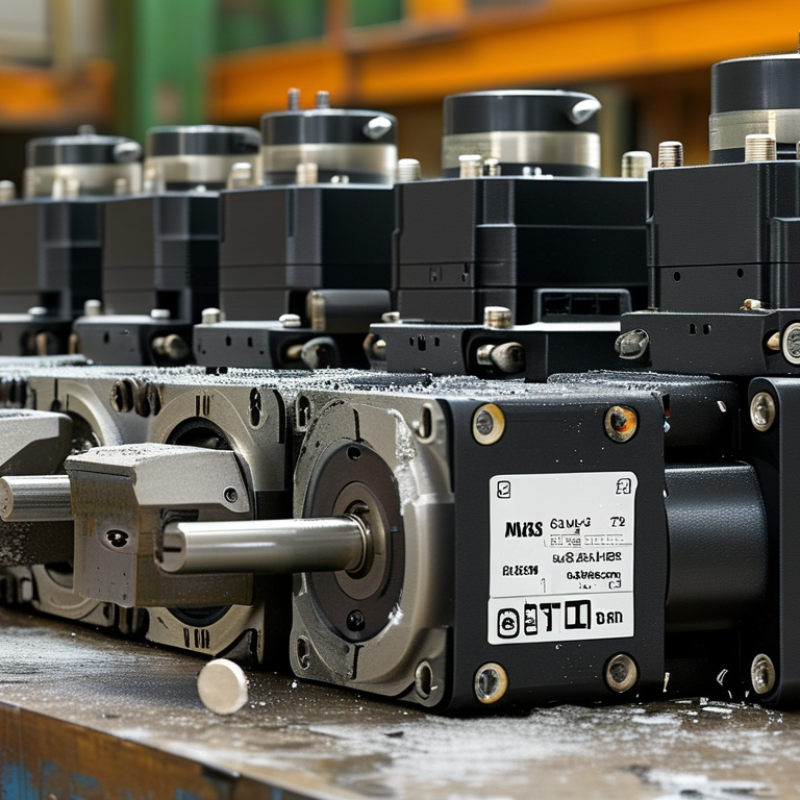
How to Choose a Linear Actuator Motor in 2026?
What Is a Linear Actuator Motor and How Does It Work?
A linear actuator motor converts rotary motion into controlled straight-line movement. Inside, an electric motor turns a gearbox and lead screw or ball screw. A traveling nut moves along the screw, extending or retracting the actuator rod. Limit switches stop travel at preset endpoints. Many modern units add position sensors, current monitoring, and feedback control. This design appears in adjustable beds, automation equipment, solar positioning systems, and access mechanisms. The motor does not lift by itself. The screw, gearing, load path, and mounting points share that job. That detail is often missed during selection.
To choose one in 2026, define force, stroke length, speed, duty cycle, and required accuracy. Measure the real load, including friction and starting resistance. A 500-newton rating may fail when the mechanism binds or the load is offset. Check voltage, noise, ingress protection, temperature range, and emergency stopping behavior. For repeated positioning, feedback is usually more dependable than relying only on timed travel. In practical installations, misalignment causes more trouble than modest motor under-sizing. I have seen a smooth prototype become unreliable after dust, side-load, and continuous cycling exposed weak brackets.
Tips: Keep the actuator aligned with the load. Use mechanical stops only when the design allows them. Leave a safety margin, but avoid oversized units. An oversized actuator can waste energy and reduce control quality. Test the complete assembly, not just the motor on a bench.
A linear actuator motor converts electrical energy into controlled linear motion. Depending on its design, the motor drives a lead screw, ball screw, belt, or voice-coil mechanism to produce movement along a straight axis.
The chart shows representative engineering values for common actuator motor types. Screw-driven actuators generally provide higher thrust and better holding force, while belt-driven and voice-coil systems can deliver higher speed. Actual performance depends on the actuator size, duty cycle, load direction, stroke length, controller, and operating environment.
When selecting a linear actuator motor, compare required force, travel speed, positioning accuracy, duty cycle, noise level, backdrivability, and available installation space. Choose a motor with sufficient continuous force rather than relying only on its peak rating.
Choosing a linear actuator motor starts with defining the motion, not browsing catalogs. Record the moving load, stroke length, target speed, acceleration, and daily cycles. Include friction, gravity, shock, and cable drag. A 500 N load moving horizontally differs greatly from a 500 N vertical load. For vertical travel, calculate holding force and consider what happens during power loss. The 2024 IFR World Robotics report recorded 541,302 industrial robot installations in 2023. This growth reflects a practical lesson: repeatable motion depends on correctly matched components, not rated force alone.
Measure the duty cycle carefully. A motor that works for ten seconds may overheat during continuous cycling. Check peak force, continuous force, travel speed, backlash, noise, mounting space, and protection against dust or moisture.
The U.S. Department of Energy reports that motor-driven systems consume more than half of industrial electricity in many facilities. Efficiency matters. Still, I would not select the lowest-wattage motor automatically.
Slow acceleration, poor alignment, or frequent stalls can waste more energy and shorten service life. My own preference is to test a worst-case cycle with the real load. Simulations can look convincing. Reality is less polite.
Tips: Create a simple requirement sheet before choosing a motor. State “100 mm stroke, 300 N continuous load, 20 cycles per hour” instead of “strong and fast.” Leave a safety margin, but question oversized designs. A larger actuator may increase cost, power demand, and moving mass. Recheck your assumptions after a prototype test. That step is often skipped, and it should not be.
How to Choose a Linear Actuator Motor in 2026?
When comparing actuators, begin with force, stroke length, and speed. A 1,000-newton actuator may not lift 1,000 newtons safely in every position. Mounting angle, friction, and side loading can reduce real capacity. I have seen projects fail because designers compared peak force, not continuous force. Check the duty cycle too. Ten seconds of movement per minute creates less heat than continuous operation. The International Energy Agency reports that electric motor systems consume about 45% of global electricity. Efficiency deserves attention, even in a compact actuator.
Compare voltage, current draw, and gearbox efficiency before selecting a motor. Then examine backlash, noise, holding force, and backdrivability. A quiet motor can still move inaccurately. A fast actuator can also overshoot. According to the U.S. Department of Energy’s Motor Systems Market Assessment, motor-driven equipment represents roughly 46% of electricity use in U.S. manufacturing. Small efficiency losses can scale across many machines. That figure is easy to overlook.
Environmental specifications matter just as much. Check the IP rating under IEC 60529, operating temperature, corrosion resistance, and cable protection. Add limit switches or position feedback when repeatability matters. Potentiometer feedback may suit basic control, while encoder feedback supports tighter positioning. Do not trust brochure speed alone. Test the actuator under the actual load, stroke, temperature, and mounting conditions. My own imperfect rule is simple: if the specification sheet lacks duty-cycle details, treat the product as unverified. That caution may cost time. It can prevent a costly redesign.
How to Choose a Linear Actuator Motor in 2026?
Select the motor and control system together. Begin with the real load, not the catalog rating. Measure force, stroke length, speed, duty cycle, and mounting position. A 500 N load moving horizontally differs greatly from a 500 N vertical load. Gravity changes everything.
Choose a motor with enough torque after gearbox losses. Add a practical safety margin, but avoid oversized motors. Oversizing increases cost, heat, and energy use. The International Energy Agency’s Energy Efficiency 2023 report estimates that electric motor systems consume nearly half of global electricity. Efficiency matters. For accurate positioning, use an encoder or another feedback device. Open-loop control may be cheaper, but it can miss stalls and changing loads.
Match the control system to the application. A basic relay suits simple extend-and-retract movement. A PLC or motion controller fits synchronized machinery. Include current limiting, end-stop protection, and emergency isolation. IEC 60204-1 and ISO 13849-1 provide useful guidance for machine electrical and control safety. Grand View Research’s 2024 linear actuator market report projects strong market growth through 2030, suggesting wider use of intelligent control. Yet market growth does not guarantee a good design. I still test the actuator under heat, vibration, and repeated cycles. Laboratory results can look perfect. Field conditions rarely do. Allow space for maintenance and admit uncertainty in early calculations.
| Selection Dimension | Typical Requirement or Range | Recommended Motor or Control Option | Why It Matters |
|---|---|---|---|
| Load Type | Push, pull, lift, clamp, tilt, or adjust a mechanism | Choose a linear actuator rated for the actual axial load and mounting direction | A lifting application normally requires a higher safety margin than a horizontal adjustment |
| Required Force | Calculate the static load, friction, acceleration, and gravity component; commonly 100 N to 10,000 N for compact industrial systems | Select an actuator with continuous capacity above the calculated working force and a suitable peak-force rating | Sizing only for the nominal load can cause overheating, stalling, or premature screw and gear wear |
| Stroke Length | Usually 50 mm to 1,000 mm, depending on the machine envelope | Match the usable stroke to the required travel; allow clearance for retracted and extended positions | A longer stroke can increase actuator length, bending risk, and position error |
| Speed | Approximately 5 to 250 mm/s for common electromechanical actuators | Use a DC motor for simple variable-speed motion, or a servo motor when speed and position must be tightly controlled | Higher speed often reduces available force and increases heat generation |
| Duty Cycle | Intermittent operation may be 10% to 25%; demanding machines may require 50% or continuous duty | Choose a motor, gearbox, screw, and thermal design rated for the expected on-time and cycle frequency | Duty cycle is a major factor in motor temperature, service life, and allowable peak force |
| Motor Technology | Brushed DC, brushless DC, stepper, or AC servo | Brushed DC for low-cost simple motion; brushless DC for longer life; stepper for indexed motion; servo for dynamic closed-loop control | The motor type affects maintenance, efficiency, noise, controllability, and system cost |
| Screw Mechanism | Lead screw, ball screw, or roller screw | Use a lead screw for economical intermittent movement; a ball screw for high efficiency and frequent cycling; a roller screw for very high load and life requirements | Screw selection determines efficiency, backdrivability, noise, precision, and service life |
| Position Accuracy | Basic end-stop positioning to sub-millimeter repeatability | Use limit switches for end positions, an encoder for feedback, or a servo system for closed-loop positioning | Accuracy depends on backlash, screw pitch, encoder resolution, load variation, and mechanical stiffness |
| Holding Position | Load must remain fixed when power is removed or during a stop | Select a self-locking screw where appropriate, or add a brake, counterbalance, or mechanical lock | Do not rely on motor torque alone to hold a suspended or safety-critical load |
| Power Supply | Common DC systems: 12 V or 24 V; industrial AC systems commonly use 115 V, 230 V, or 400 V | Match motor voltage, current capacity, inrush current, and controller rating to the available supply | Voltage mismatch can cause insufficient force, excessive current, driver faults, or motor damage |
| Control Method | Manual switch, relay, PWM, analog command, pulse and direction, or network control | Use relays for basic two-position motion; PWM for DC speed control; pulse and direction for stepper systems; fieldbus or Ethernet control for integrated automation | The control interface must support the required motion profile, feedback, diagnostics, and machine communication |
| Feedback | None, end-of-stroke switches, potentiometer, Hall sensors, incremental encoder, or absolute encoder | Choose feedback according to the required position accuracy, homing method, and fault detection level | Feedback improves repeatability and helps detect stalls, unexpected movement, and mechanical faults |
| Environmental Protection | Indoor, dusty, wet, outdoor, washdown, or corrosive environment | Specify the required IP rating, corrosion-resistant materials, seals, cable protection, and operating temperature range | Ingress protection and temperature limits directly affect reliability and maintenance intervals |
| Noise and Vibration | Low-noise motion for medical, office, laboratory, or residential equipment | Consider a brushless motor, optimized gearing, a suitable screw pitch, acceleration ramps, and rigid alignment | Gear mesh, screw speed, mounting stiffness, and control tuning are common sources of noise |
| Safety Requirements | Pinch-point protection, emergency stop, overload protection, limit protection, or redundant restraint | Use current or force monitoring, dual limits where needed, guarded moving parts, a brake or lock, and a safety-rated control architecture | A linear actuator should be treated as part of the complete machine safety system, not as a standalone safety device |
| 2026 Selection Priority | Balance performance, energy use, serviceability, connectivity, and total cost of ownership | Prefer a correctly sized actuator with closed-loop diagnostics and a controller compatible with the machine network | The lowest purchase price may result in higher energy consumption, downtime, integration effort, and replacement cost |
Note: The values shown are general engineering reference ranges. Final selection should be verified using the complete load profile, mounting geometry, duty cycle, ambient conditions, safety requirements, and actuator test data.
Safety should guide the selection, not only lifting force. During commissioning, I check load direction, pinch points, emergency stopping, and mechanical limits. A motor rated for 1,000 newtons may fail when side loading or poor alignment increases friction. Use limit switches, overload protection, and a brake when gravity can back-drive the actuator. ISO 13849-1 and IEC 60204-1 provide useful frameworks for assessing control-system risks. They do not replace a site-specific risk assessment. That distinction matters.
Durability depends on duty cycle, environment, and maintenance access. IEC 60529 ingress ratings help compare protection against dust and water, but an IP rating does not prove corrosion resistance. Check rated cycles, thermal limits, noise, backlash, and expected stall frequency.
The International Energy Agency reports that electric motor systems consume roughly half of global electricity, so efficiency deserves attention during repeated operation. A lower-power actuator can reduce heat and operating cost. However, efficiency figures alone can mislead. They may exclude controller losses or standby consumption.
Installation problems often appear after purchase. Measure retracted length, stroke, mounting holes, cable travel, and clearance around moving joints. Leave room for inspection. In field work, I have seen a correctly sized actuator bind because its mounting brackets were not parallel. A spreadsheet missed that detail. Select feedback equipment when position accuracy matters, and verify voltage, current, connector protection, and control compatibility. Grand View Research has projected continued growth in the linear actuator market through 2030, increasing model choice but also comparison risk. Independent test records are more useful than attractive specifications.
Record load, stroke, speed, acceleration, daily cycles, friction, gravity, shock, and cable drag.
A 500 N horizontal load differs from a 500 N vertical load.
Check operating time, rest time, cycles per hour, peak force, and continuous force.
No. Slow acceleration, misalignment, and frequent stalls can waste energy.
Consider limit switches, overload protection, emergency stopping, mechanical limits, and a brake.
Review duty cycle, thermal limits, rated cycles, noise, backlash, stall frequency, and maintenance access.
Measure retracted length, stroke, mounting holes, cable travel, joint clearance, and inspection space.
Use feedback when position accuracy, repeatability, or controlled stopping matters.
Include a reasonable margin for friction, shock, alignment errors, and changing loads.
Choosing the right Linear Actuator Motor in 2026 starts with understanding how it converts rotary motion into controlled linear movement for lifting, pushing, pulling, or positioning tasks. Begin by defining your motion requirements, including load capacity, stroke length, speed, duty cycle, mounting space, and positional accuracy. These factors will help narrow the most suitable actuator design for your application.
When comparing options, review rated force, travel speed, operating voltage, feedback capability, noise level, and energy consumption. The motor and control system should match the required precision and support safe, responsive operation, whether through switches, sensors, or automated controls. Finally, evaluate protection against dust and moisture, expected service life, thermal performance, emergency stopping, and installation requirements. A reliable selection balances performance, safety, durability, maintenance needs, and total operating cost rather than focusing on a single specification.

Stepper Motor